
A Leep of Faith: How Training A Hitter Like a Pitcher Has Created the Best Bat in the Class of 2027
Highlights
- Pitching development, philosophy, and realtime adjustments are way ahead of hitting
- We challenged ourselves to take our success in pitching and apply it to hitters
- Jack became a dude because of this
- Here are the 3-5 key things we focused on and improved.
Hitters have been dominated by pitchers the last decade. The evidence is overwhelming.
While pitchers have become obsessed with training for velocity, using technology to design pitch shapes, and the weight room to guide movement patterns, explosiveness, and arm care, hitters have done the same old thing… tee work, soft toss, easy BP, and skipping the weight room.
Hitting coaches are to blame… many just do the same old comfortable thing, while they sit on a bucket and tell a player “good” when they hit a line drive to the back net (which likely would result in a groundout to the SS). No one in the hitting world wants to react to what’s going on in the baseball world.. and that’s pure domination by the pitchers.
While pitchers are obsessed with throwing 100mph, hitters think that getting a “feel” off the tee actualy matters. The stubborness of it all is fairly impressive.
We have had many hitters “buy in” to our approach to hitting at KPI, as evidenced by all of the college commits, all league players, and now draft picks. But I’ve never gone all in on a hitter like I have with Jack Leeper, and the results have been astounding.
Jack’s Story

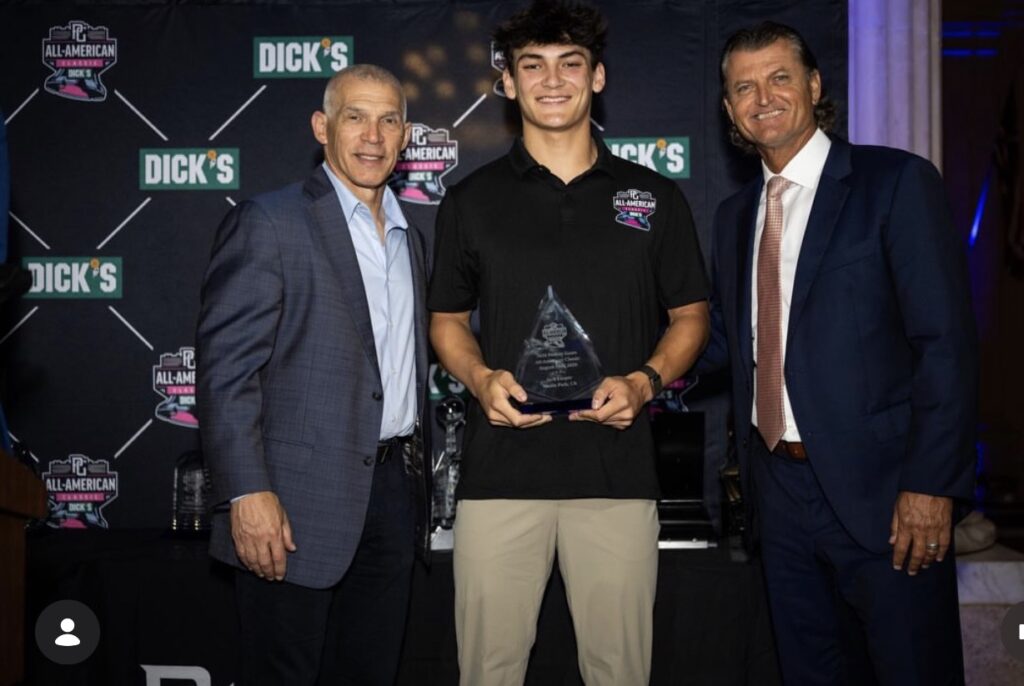
Jack is a 2027 right handed hitter that was recently named the most valuable player of the Area Code Games and was selected to the Perfect Game All American Classic. He is currently ranked in most polls as a top 20 player in the nation and some sites have him projected as a potential 1st round draft pick next July. He is a two-time All West Catholic Athletic League Player and is committed to Stanford.
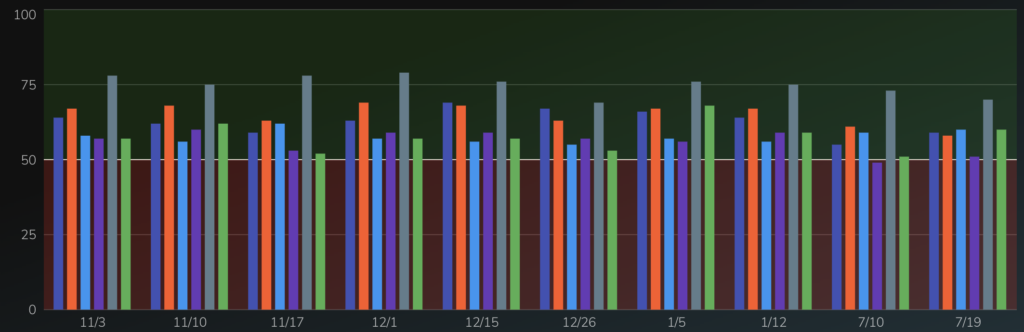
Jack did not play baseball his freshman year due to rehab from a knee surgery from football, and had a solid, but modest, freshman Summer playing travel ball. He only played one tournament the Fall of his sophomore year and as a strong relationship emerged, he decided to go all in on the KPI style of training. He made the weekly trek down to KPI from the Peninsula and strong trends started to emerge from his data (see below) and he religiously followed his workouts and hitting routines.
His Sophomore year served as a breakout campaign for the talented CF, being named 1st Team All WCAL, a rare accomplishment for a sophomore in the rugged WCAL. He followed the Spring season with a monster sophomore Summer, dominating the Summer circuit with his power and speed combo. Leeper committed to Stanford in early August before his Junior year began, culminating a rapid rise to be offered a scholarship by his dream school.
Jack again decided against the tournament circuit in the Fall of his Junior season to dedicate himself to training while getting some AB’s in the locally hosted scout ball. He had an intense Winter of training to prepare for his Junior season, where he once again dominated and is one of the rare two-time 1st Team All WCAL players (even before his senior season). He excelled in the Summer Circuit and really started to establish himself as a potential draft pick by leading his travel team (a top 10 program in the nation) in every offensive category and then dominating Area Codes with 9 hits and 5 stolen bases.
Jack has also had the unique benefit of having one system to follow. His high school, travel ball, and training facility all fall under the same umbrella. This has provided him clarity and a set path to follow. In a process that can often be noisy and complicated, his has been focused and simple.
The Training Protocols
Jack is a perfect example of the power of an integrated and wide perspective approach to training skill, strength, and movement in the same environment and system…. and why traditional hitting coaching can be so limited.
The Central Nervous System drives movement. Using our force plates and unique system to evaluate that data, Jack has a typical signature of a high level player… he is forceful and he transfers energy in his body very well, but he does not use an ideal amount of time or range of motion… meaning he can get in and out of his movements too quick.
How does this affect his swing? It has everything to do with his swing. Because he transfers energy so well, he does a classic scissor move with his lower half when he swings. A common trait of hitters that have a heavy scissor kick is that they sweep through with their hands and don’t get on plane with the ball. The eyes would have told you that when looking at Jack’s swing, but we use Blast data to measure that, and his Blast numbers told the same story.
The traditional view when seeing a swing flaw like Jack had would be to work with him on “mechanics” and get a “feel” off the tee to “groove” the swing. The science of motor learning tells us that approach is pretty much nonsense.
Here’s what we did after we objectively identified the areas of improvement…
- Strength Routine – because Jack is elite at transferring energy in his body but below average in his ability to use proper timing throughout his range of motion, his lifting looks a bit different. He still loads heavy weight in his lifts, but he focuses on a slower pace and deeper ranges of motion to train his CNS to use more time. This has resulted in maybe the most efficient movement profile we have had for a high school player. This transfers to the swing because now instead of getting in and out of the zone so quick with his scissor move and hand sweep, the body has been trained to use more time and range of motion, which makes his swing more directional and fluid
- Hitting Routine – We use a constraints led approach to coaching all of our athletes, but we have taken it to the extreme with Jack. He has a very specific routine setup that addresses his swing path, direction, and attacks his weaknesses. We also use a heavy to light bat progression in all of his low intent drills so the heavy bat can force him into the proper plane to start the drill and then he progressively gets lighter and needs to control that same movement pattern with the shorter/lighter bats at the end of the progression. His rounds are highlighted by different speeds, angles, and stimulus for the pitches so he can not only train his swing, but decision making process as well. We use external cues and goals to get him to emphasize hitting the ball in the air and maintaining direction in his swing. We do not ever talk about mechanics or where a certain body part should be moving. The environment does the coaching and his job is to execute the environment, which he does at an extremely high level.
- Mobility & Soft Tissue Routine – Even though Jack has many traits of a hyper mobile athlete, he does create excessive tension in his body and he is a base stealer, which has the highest injury rates for position players. So he has a dedicated mobility and soft tissue routine that addresses his range of motion and gets ahead of the pounding his body takes on the field, especially in the high stress times during the Spring season and the Summer tournaments. This dedication to mobility and soft tissue has led to perfect health since his football injury his freshman year.
The Conclusion
A new approach to hitting is desperately needed to counteract the dominance that pitching is experiencing. As pitcher velocities have climbed, hitting output and performance has plummeted. This has led to many hitting guys to complain about this and that, instead of taking active steps to learn and adjust to what’s going on.
Maybe taking a look at the Jack Leeper story can start to turn some heads on why hitters should be training like pitchers.
Why the Four Month vs Four Year Mindset Matters More Than EverCollege baseball has changed. The transfer portal gives coaches another way to build a…

Welcome to Part 2 of the blog series, A New Era in Bay Area Baseball: The 26 Draft. We will feature the 7 members of the #kpicrew that saw their…